

The Theatre for Corporate Culture Innovation
Corporate theatre is an instrument that is attracting interest in Italy and in the Veneto region in particular. This should come as no surprise. In our economic and social reality, in fact, the gap between the (much) value it produces and the (little) recognition it gets has long been noted.
Those who do business in Veneto often complain of ‘not knowing how to tell their story’. This is true. Companies in Veneto are innovative in many fields, but among these, there is certainly no self-telling. Caught between the stereotype of compulsive and ignorant entrepreneurship (prevalent in the national media), the hagiography of the founders and their family epics (typical of vernacular self-celebrations), and the uncritical replication of managerial storytelling codes (proposed by the less shrewd communication agencies), Veneto companies have long been stuck in a sort of narrative limbo. Corporate theatre points a way out.
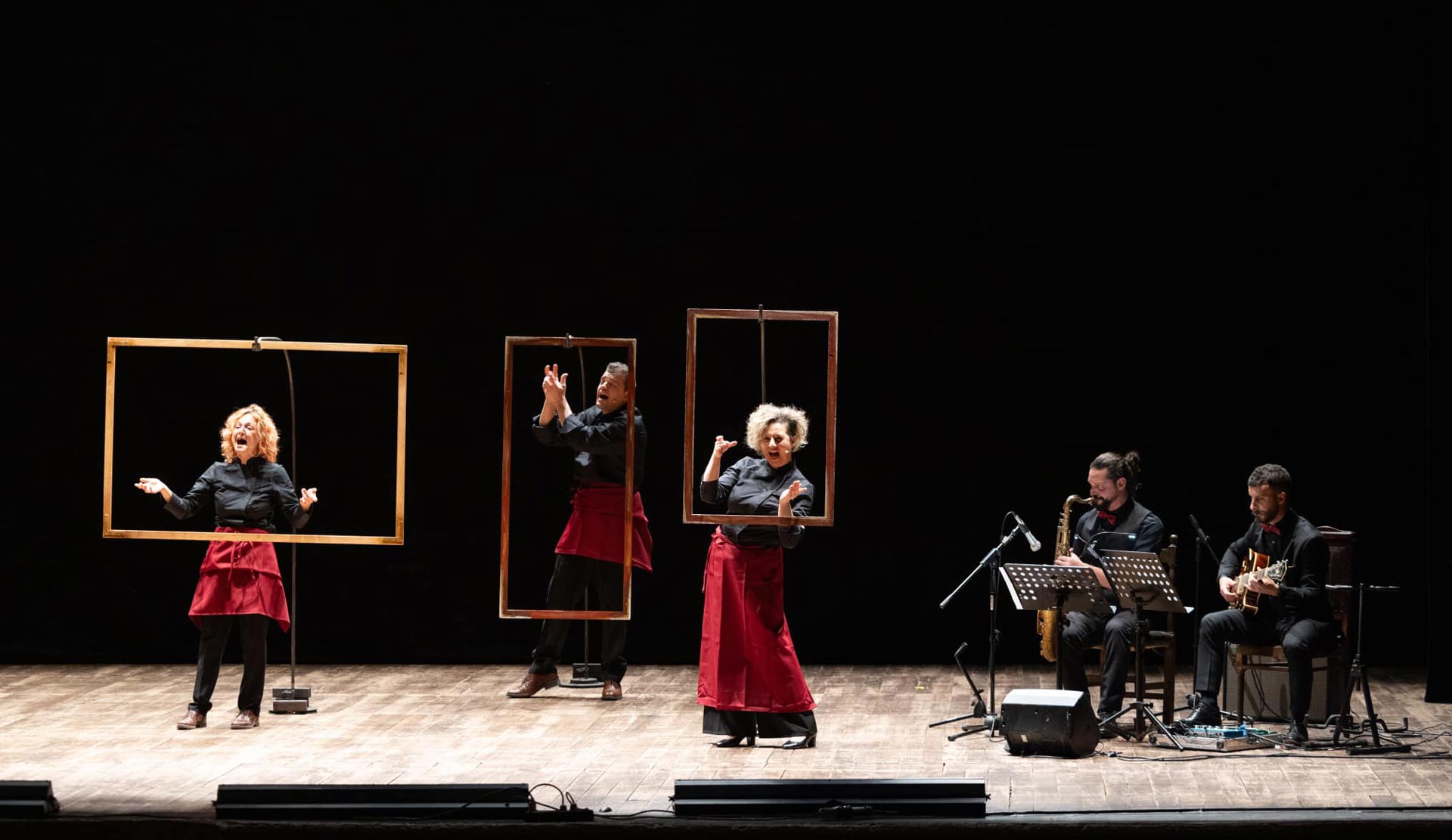
The InduCCi project ‘Cultural and Creative Industries in Traditional Industrial Regions as Drivers for Transformation in Economy and Society’ sought to give substance to this possibility by offering a series of concrete examples of how business can be told in ways that are both authentic and innovative. Through the project, theatrical art and creativity are put at the service of selected companies and paired with some local theatre companies: Zelda Teatro and Antonio Carraro SpA, Barabao Teatro and Luxardo, La Piccionaia and OMP Engineering, Teatro Bresci and La Meccanica, TOP teatri off Padova with Cast Bolzonella.
InduCCI is financed by the European Cooperation Programme Interreg Cental Europe and promoted by the Teatro Stabile del Veneto and the Chamber of Commerce of Padua.
The overall objective of the European project is precisely to create new connections between the cultural sector and traditional enterprises in order to accompany the region in its industrial transformation. The entrepreneurial spirit in our region also animates the world of cultural production. Dozens of theatre companies now operate with the attitude and mechanisms of small business, taking the language of theatre outside what we are used to thinking of as the conventional spaces of the theatre. For years, theatre has been performed in schools and universities, in museums, in suburbs to be regenerated, in villages to be discovered and tourist destinations to be promoted. And now also in industries.
Within this framework, the five theatre companies were put in relation with as many small and medium-sized companies in a path that, from mutual acquaintance, evolved into a search for the most authentic and significant identity elements to then crystallise into original corporate dramaturgies, now presented in summary form. Five small performances that configure the first structured operation of corporate theatre in Italy, conducted by a Teatro Stabile in partnership with the territory’s main economic players, first and foremost the Padua Chamber of Commerce.
The result is a new and courageous representation of economic production in the region. A narrative that tries to keep its distance both from the caustic caricature of the entrepreneur, on which theatrical language often prefers to linger, and from the rhetoric of tradition and benevolent success favoured by companies. Rather, it is about relationships between people in the workplace, technological change, the role of material artefacts and the weight of history.
It is in this way, by exploring the social and material richness of doing business, that the project seeks to contribute to the industrial transition evoked by many. The urge is to think of this transition first of all culturally. The recognition of Veneto as ‘Italian Capital of Enterprise Culture’ for 2022 is the ideal opportunity to re-imagine the relationship between culture and enterprise.
There is a need to evolve a faded pattern in which the company has the money, culture has the beauty, and a classic exchange relationship is established between the two. Contemporary business can no longer limit itself to a role of contemplating culture but must actively rediscover its own being as a producer of culture and share it through collaboration with professionals in artistic production.